




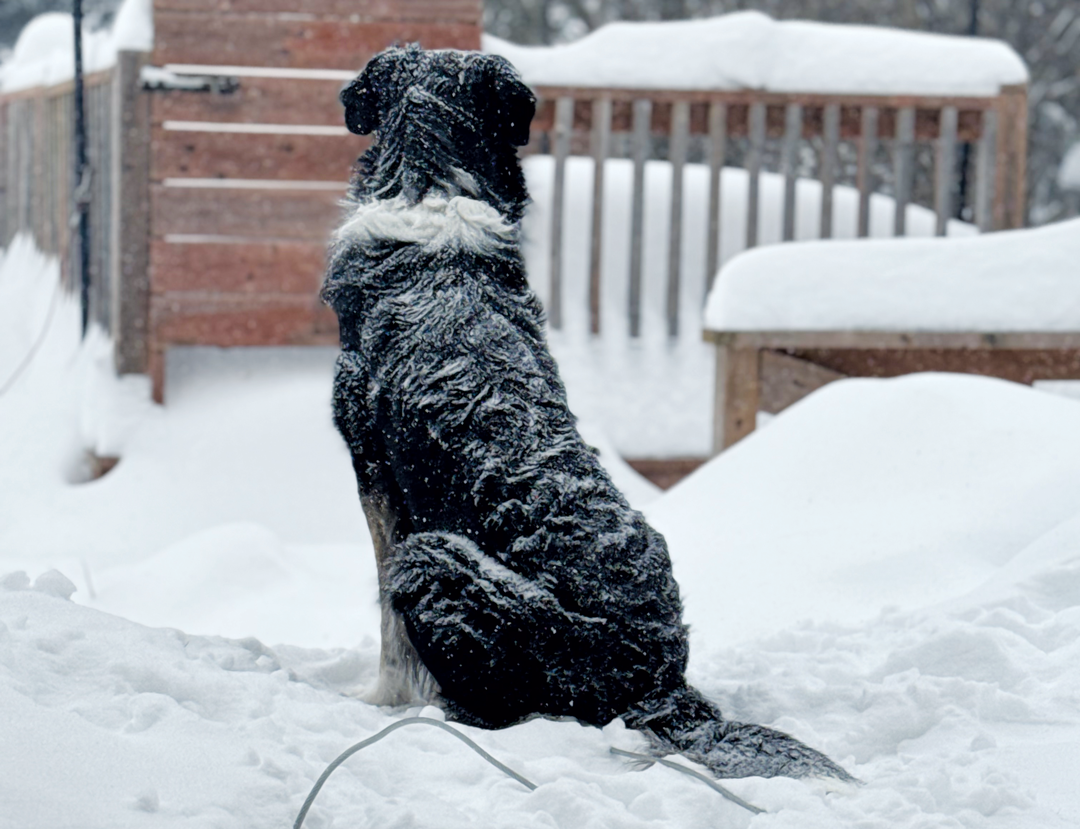

With snow on the ground and ski hills already open, the last thing on residents’ minds is keeping their pets safe from ticks.
But according to local vets and the province’s health authority, ticks can become active during warm spells throughout the winter – like the mild, rainy days we had last week.
“In Quebec blacklegged ticks become inactive once temperatures are consistently below 0°C and the ground is covered with snow or frozen soil,” wrote CISSSO spokesperson Maida Lujinovic in an email to the Low Down. “This usually means that the risk of being bitten is very low during the coldest months of winter, typically from late December through February. However, ticks can become active again any time the temperature rises above 4°C, even in late fall, early spring or during mid-winter thaws. So we can’t say that there is a completely ‘risk-free’ period; it depends on the weather more than the calendar.”
With temperatures hovering around 5°C during the week of Jan. 7, ticks could have become active in the Hills, and it’s important to be on alert for tick bites and symptoms, even with snow on the ground.
When frequent warm spells hit the Hills, pet owners should consider giving their pets medication until colder temperatures return, according to Annie Bouchard, a veterinary technician at the Clinique Vétérinaire de la Gatineau in Chelsea.
“Normally my recommendation when I talk to my clients is always that we go up to November. And then I tell people, it’s about the weather. As soon as it’s zero degrees or [higher], you should treat; you should prevent,” Bouchard said.
“Let’s say we are in the middle of December; it’s -20°C outside and [your pet is] due for [its] monthly medication. Then you can wait a bit,” she said. But, she added, if the forecast looks like it’s rising to zero or higher, then she recommends giving your pet a dose.
Bouchard explained that pet owners don’t need to worry about fleas until the temperature rises to about 10 or 12 degrees, but ticks are more resilient, and with deer populations growing in Quebec and in the des Collines region, ticks have become a big problem in the Hills.
“The ticks are really bad in this area. There’s a lot of Lyme disease, there’s a lot of anaplasmosis, and those diseases can really make an animal ill,” she said.
Anaplasmosis is a tick-borne bacterial disease, primarily affecting ruminants (cattle, sheep, goats), but also dogs and horses. It can cause fever, anemia, lethargy and jaundice by infecting red blood cells.
According to Health Canada, Lyme disease in pets can go undetected for months, but symptoms typically occur three to 30 days after a tick bite. Sore muscles and joints are the most common symptoms of Lyme disease in pets. Some animals may develop a fever or fatigue. Other severe symptoms include kidney and neurological damage.
“So, yes, as soon as it gets close to zero degrees, don’t take a chance: prevent,” added Bouchard.
Bouchard said there is no real risk to pets taking tick meds year-round. Since many are already taking them for nine to 10 months, the added dosage won’t have much effect, she added.
In humans, Lyme disease can differ from person to person and can include a rash (sometimes shaped like a bulls-eye), fever, chills, headaches, fatigue, aching muscles and joints, and swollen lymph nodes. More severe symptoms include: severe headaches, facial paralysis (such as Bell’s palsy), joint pain, irregular heartbeat and nervous system disorders.
What to do if you get a tick bite
According to CISSSO, if you get a tick bite, the first thing to do is safely remove the tick using a tick remover or fine-tipped tweezers to grasp it close to the skin and pull upward with steady, even pressure. Don’t twist or squeeze the body of the tick. Don’t use your fingers or squish the tick as it could easily spread Lyme disease. After removal, clean the area with soap and wash your hands. Place the tick in a sealed container, label it with the date and where it was found on your body. Keep this in the fridge, as it could be helpful if you develop symptoms later.
“In Quebec we recommend calling Info-Santé 811 after a tick bite. The nurse will assess your situation and tell you whether you should see a health professional,” said Lujinovic. “In some situations, a single preventive dose of antibiotics may be recommended within 72 hours of the bite. This is typically considered if the tick is identified as a blacklegged tick and was attached for more than 24 hours.” If the bite occurred in an area with a high rate of Lyme disease, she explained that patients should monitor the bite area for 30 days and check for symptoms, “especially the classic bulls-eye rash.” If symptoms appear, call Info-Santé 811 or see a health professional.
Skip the ER for tick bites
According to Lujinovic, patients who suspect a tick has bitten them don’t have to wait hours in an emergency room. Instead, they can go directly to a pharmacist for treatment.
“After a tick bite in an endemic area, if the tick has remained attached to the skin for more than 24 hours, it is recommended that you consult your pharmacist, who will assess whether post-exposure prophylaxis is appropriate. In this case, bring the tick with you,” she advised.