




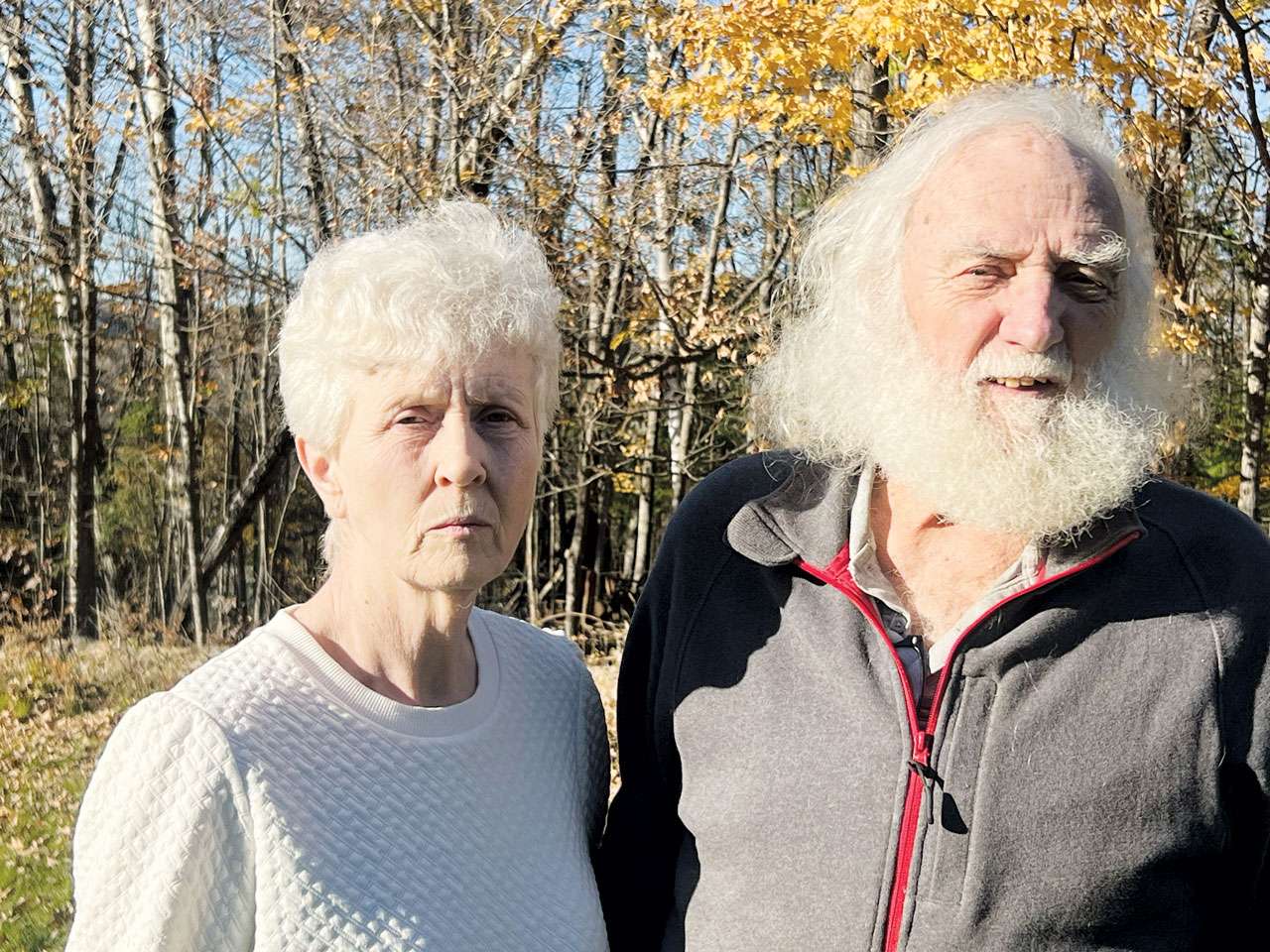

Dear readers, this week we’re launching something we hope will become a popular new feature in the Low Down. In a nutshell, we are opening up a space in the newspaper for readers to share stories about how we look out for our neighbours.
Our first submission is from Wakefield resident René Piché. To read more about the thinking behind this new feature, please read Nikki Mantell’s editorial on Page 4.
Submit your own story or send us a tip about a random act of kindness in the community to: general@lowdownonline.com
In November 2019, my wife, Denise, was diagnosed with the rare neurological ailment aphasia. At first she experienced difficulties in pronouncing certain words. Today, she is totally non-verbal. Her general demeanor mimics that of someone suffering from dementia, but the reality is quite different. Aphasia robs you of your ability to communicate, not necessarily of your ability to think. Without the ability to communicate, you become a prisoner of your own body. Because she cannot call 911 in an emergency, nor can she explain a medical situation afflicting her, I have become her caregiver. It is a daunting task.
Before all of this happened, if someone had described to me a similar situation, I probably would have reacted by saying, “I know what you mean.” I say to myself today, “No, you didn’t.”
Last October she ceased driving for safety reasons. A few years earlier, as a result of an inflammation of the optic nerves, I also ceased driving. We live just outside the village of Wakefield, and suddenly we became “isolated.” At first we counted on my daughter, Liette, to run errands and attend to other needs on our behalf, but we quickly came to the conclusion that this was completely unreasonable. What are we to do?
I have known the Mantells for over half a century, and I have known Nikki literally since she was a toddler. As a result of my previous involvement with the community (CLSC, CHSLD, municipal and regional government, Scouts, the strawberry farm at Edelweiss and many more), we have kept in touch. Last October, I contacted Nikki to explore ideas that could help us find someone to assist with the driving. I don’t know of anyone who has a better grasp of the fabric of this community. I also know that I can rely on the quality of the information provided.
The exchange took place in the evening. At one stage, she suggested that we put an ad in the Low Down. “Sounds like a good idea,” I responded. “What would it say?” she
asked, and, as I finished dictating some words for a classified, I heard, “It’s in.” That probably went 100 miles over my head until 8 a.m. the next morning when the phone rang and the caller said, “I am calling about your ad in the Low Down.” That moment turned my world upside down – for the better.
There were many calls that day from Low Down readers who had all the attributes sought – and then some. There were more calls the next day, the day after and for several days beyond. I did not need that many callers, but I did not have the heart to turn off the ad because these
callers were genuinely motivated by their empathy and their intention to contribute to the well-being of this community. I could sense it in their voice. Today, when the designated driver comes to pick up Denise for a visit to the hairdresser or to see a member of her family in Ottawa, they take charge of the situation the moment they walk into the house. I feel good; I feel safe for her. The moment they pull out of the driveway, I often take the opportunity to go out on the balcony, where I slowly, very slowly, let the tension dissipate from my body.
The designated drivers are a blessing. You probably have no idea just how important support of this kind really is for a caregiver. Wakefield, you can stand proud. Thank you all. You fully deserve it. Take it from someone who benefits from it greatly.
René Piché lives in Wakefield.