





The Des Collines region is a “medical desert” with too few doctors, nurses and specialists to meet the needs of a growing population, according to the head of the region’s health authority.
In an interview with the Low Down on May 21, CISSSO President and CEO Dr. Marc Bilodeau said his department is trying to recruit more healthcare professionals, but wage discrepancies and geography are making recruitment difficult.
“There are not enough physicians working in the Des Collines in order to meet the population needs, and we’re trying to address that through recruiting specifically for the area,” said Bilodeau. “[We] are working hard at trying to convince and bring additional physicians [here].”
He said recruitment has been an uphill battle, particularly given compensation structures that favour other regions.
Physicians in more remote areas such as Maniwaki and Shawville receive rural isolation bonuses, but because the Des Collines sits close to Ottawa and Gatineau, clinics in Wakefield, Chelsea and the Wakefield Hospital do not qualify, said Bilodeau.
Bilodeau also pointed out that healthcare needs haven’t kept up with “significant growth” in the Des Collines region over the past decades.
“I don’t think we’ve been able to follow with the support that needs to be put in place, and it’s not only the medical support, it’s also the social services, the CLSC structure and so on,” he said.
Patient travels to Montreal 30 times for care
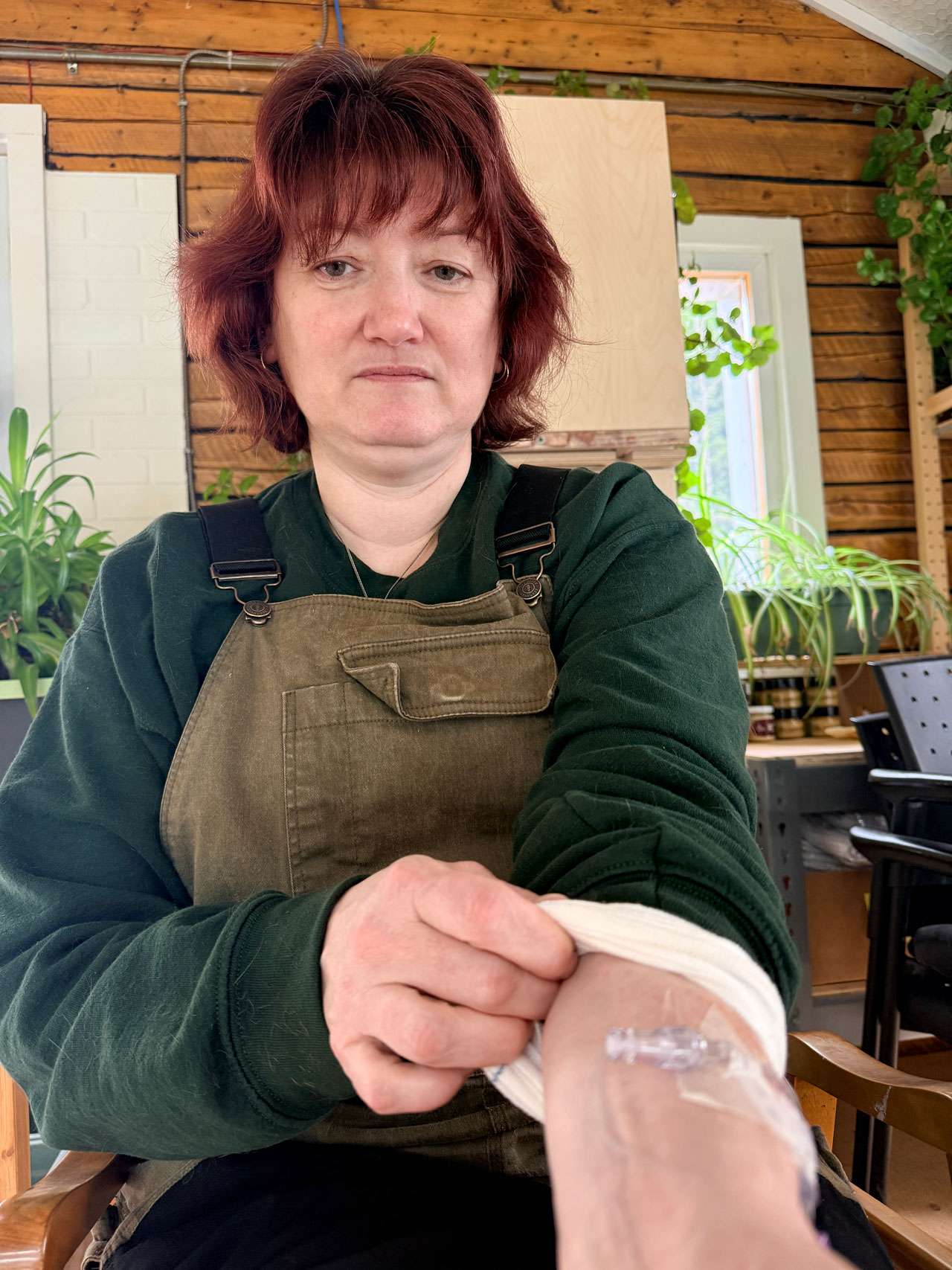
The consequences of this “medical desert” are being felt by patients like Masham resident Sandra Bornn, who has travelled to Montreal at least 30 times in the past two years for a double mastectomy and reconstruction surgery, along with complications that arose after the surgery.
At the time her issues began, she was told there was only one surgeon in the Outaouais region who could see her and that the wait could be significant. She was referred to Montreal and has been receiving care there ever since.
“We’ve gone back and forth to Montreal, probably 30 times – that might be a conservative amount – in the past two years,” said Bornn. She noted that she’s travelled to see oncologists, plastic surgeons and for surgery, and “whether it’s a five-minute appointment or a five-hour procedure, it’s a six-hour drive to CHUM in Montreal and back.”
Bornn is now fighting sepsis and is awaiting further treatment before another surgery. She said coordinating care between her family doctor in the Des Collines, surgeons in Hull and specialists in Montreal has been extremely difficult.
“It’s like a comedy,” she lamented.
She was scheduled to have a procedure locally at the Hull Hospital more than a week ago, but no follow-up appointment was ever booked, she said.
“Finally [my surgeon] called me at 9:30 in the evening, and said, ‘Forget this, we’re going to stop waiting…. Clearly, it’s not going to happen. We’re going to do surgery next week.’ So I’m back to Montreal,” she said, again, sounding exasperated.
The repeated travel has affected both her and her husband’s work. Bornn runs Apiverte Beekeeping and said maintaining the business has become nearly impossible, forcing her to rely on volunteers and other helpers.
Bornn said the care she has received both locally and in Montreal has been excellent, but added she understands that “this region is being asked to do more with less.” She said she’s going public with her story because, while “I’m strong,” there are others in worse situations – perhaps elderly or more vulnerable – and can’t make the weekly trips to Montreal.
Recruitment challenges and funding limits
Bilodeau said he is aware of broader inefficiencies in GAP, Quebec’s primary care access system for patients without a family doctor. He said improvements are underway, but the system is constrained by funding, including only a 1.4 per cent budget increase from the provincial government this year.
“Obviously I would have hoped for a bigger amount, but at the same time I’m comparing myself to other organizations in the province and we’re not at the bottom of that list. We still have an increase in our budget, which allows us to keep doing what we were doing,” he said, adding that he’s hopeful there’s some room in the budget to do a bit more.
In order for CISSSO to “do a bit more,” Bilodeau said he needs to cut down on overtime for doctors and nurses and hire fewer outside workers to fill the gaps in the Outaouais.
Equipment, not bonuses, driving shortage: advocate
Health advocate Marcel Chartrand of Vigi Santé disagreed that isolation bonuses are a major factor behind staffing shortages in the Des Collines.
“It’s not a question of bonuses, because the bonuses are not a million dollars. It’s a few thousand,” said Chartrand. “Look at the Pontiac. There is nobody on the GAP in the Pontiac. They have enough doctors.”
He said the main issue is working conditions and outdated equipment at facilities such as the Wakefield Hospital, the Wakefield Family Medical Centre and CLSCs in the Hills, pointing in particular to aging radiology equipment.
“We would change the radiology to a digital one, because we have the only analog machine in the whole of Quebec – it makes no sense,” said Chartrand about one of the changes he would advocate for.