




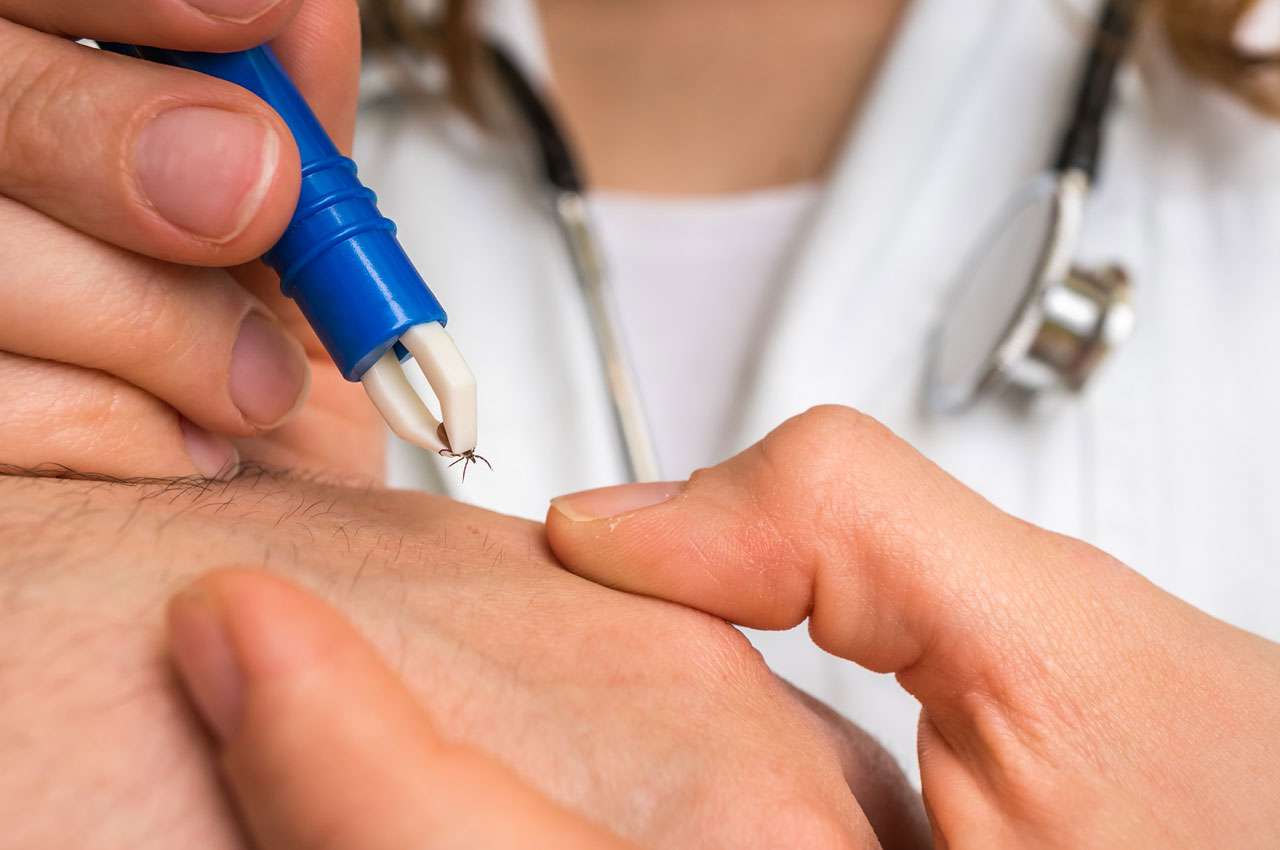

Tick season is upon us and there’s more of them, which has the local public health authority urging residents to exercise extreme caution around ticks.
The Centre intégré de Santé et des Services sociaux de l’Outaouais (CISSSO) warned in a May 14 press release that the number of ticks is increasing and that they can carry and transmit Lyme disease to humans.
“Nearly all municipalities in the Outaouais region are now endemic for Lyme disease,” CISSSO wrote in the release.
Dr. Christelle Aicha Kom Mogto, a specialist in public health and preventative medicine at CISSSO, told The Equity and 104.7 Outaouais in an on air interview that since 2022, reported cases of Lyme disease in the region have more than quadrupled. She said that from 2010 to 2022, the health network saw an average of 15 cases per year. In 2023, there were 24 reported cases, in 2024 there were 50, and in 2025 there were 73.
The health authority is advising people to avoid tall grass and when walking in wooded areas, people wear long socks and pants, long sleeve shirts, tuck shirts into pants and pants into socks to prevent tick bites. CISSSO also recommends DEET- or icaridin-based insect repellent.
To reduce the risk of ticks on your own property, CISSSO said it is important to mow your lawn, especially in areas where children play. Creating a separation between wooded areas and lawns and patios with a gravel or woodchip path can also keep ticks at bay.
After spending time outdoors, you should carefully inspect your clothing, gear, pets and the entirety of your body for ticks.
CISSSO spokesperson Maida Lujinovic told the Low Down last year that if you get a tick bite, the first thing to do is safely remove the tick using a tick remover or fine-tipped tweezers to grasp it close to the skin and pull upward with steady, even pressure. Don’t twist or squeeze the body of the tick. Don’t use your fingers or squish the tick, as it could easily spread Lyme disease, she said. After removal, clean the area with soap and wash your hands. Place the tick in a sealed container, label it with the date and where it was found on your body. Keep this in the fridge, as it could be helpful if you develop symptoms later.
Skip the ER for tick bites
According to Lujinovic, patients who suspect a tick has bitten them don’t have to wait hours in an emergency room. Instead, they can go directly to a pharmacist for treatment, or call 811.
“After a tick bite in an endemic area, if the tick has remained attached to the skin for more than 24 hours, it is recommended that you consult your pharmacist, who will assess whether post-exposure prophylaxis is appropriate. In this case, bring the tick with you,” she advised.