




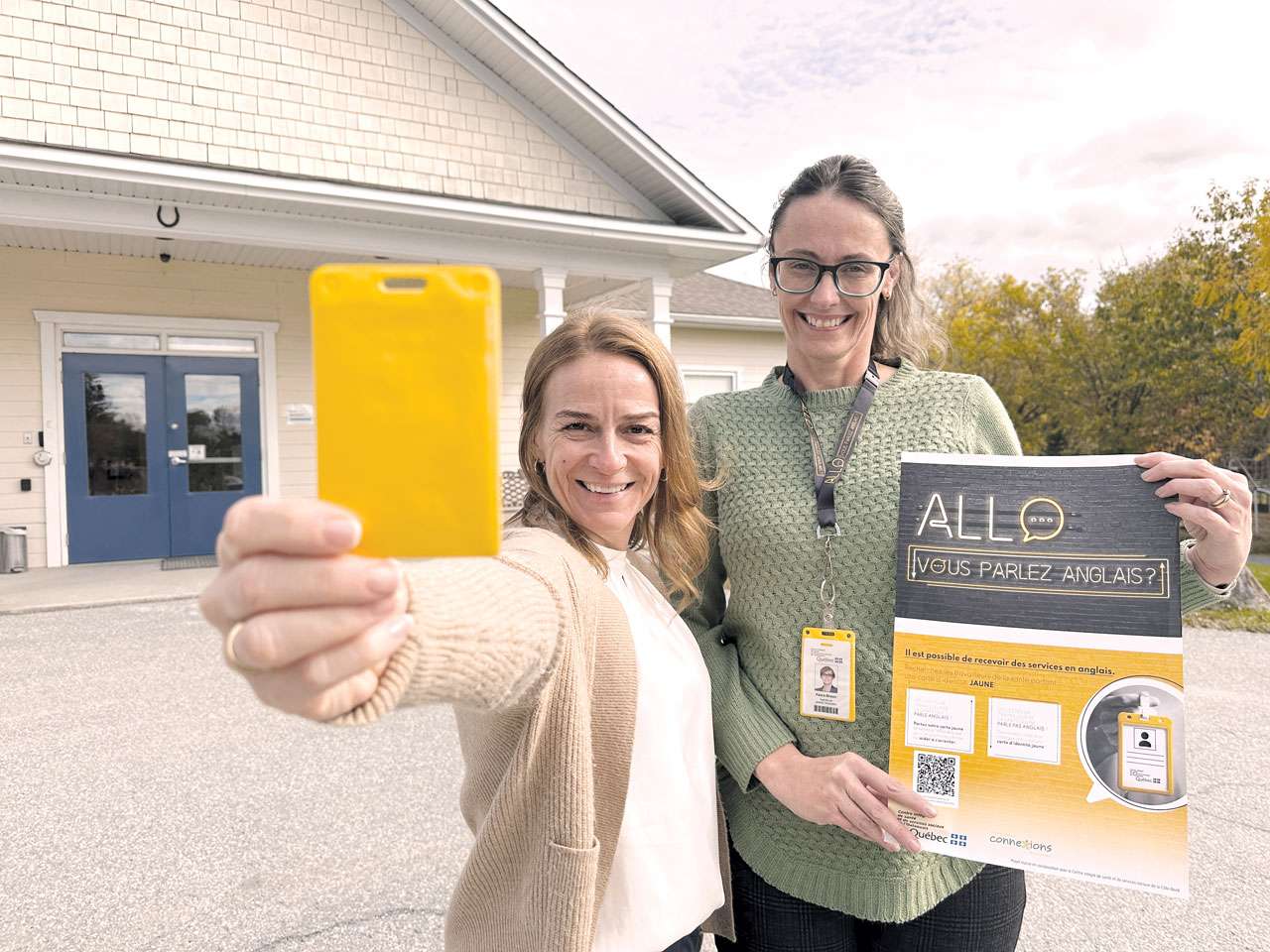

English-speaking Quebecers who struggle to navigate through Quebec’s GAP healthcare system are getting some much-needed help, as the province is funding a pilot program to hire “patient navigators” to help them book doctors’ appointments and help with other services.
Quebec is investing $995,000 to hire navigators in nine administrative regions outside Montreal, including the Outaouais.
The local program will be administered by Connexions Resource Centre, which says it has been pushing for this program for several years, as navigating the province’s Primary Care Access Point (GAP) has become increasingly difficult for seniors and vulnerable populations.
“We help people almost on a daily basis who are … trying to navigate their way and to find services,” said Danielle Lanyi, executive director of Connextions Resource Centre. “It’s sometimes very complex. This allows us to formalize what we do and better structure it. And also to go a bit further in accompanying people to navigate the services.”
These patient navigators will help with a multitude of services: from instructions on how to book a doctor’s appointment through the GAP phone service, which can be complicated and lengthy, to coordinating rides to and from appointments – including meeting with a patient at a hospital to help translate technical medical jargon. However, Lanyi was clear that Connexions is not a transportation service, and that navigators are not permitted to interpret technical medical information for patients.
“It’s also intended to help when people go to the hospital for tests – that can be a bit daunting, too. Like, ‘Where do I go?’ It’s complicated. And you add language as a barrier, like somebody who doesn’t understand or read French, it can be difficult,” Lanyi explained.
While the navigators won’t be medical professionals – like doctors or nurses – Connexions is looking to hire someone who has social work experience because, along with the daunting and complicated processes to book a doctor’s appointment, many vulnerable people also struggle with mental health and that can make things even worse for a patient, said Lanyi.
“There’s the aspect of supporting people psychologically who are trying to find services, and so they’re often feeling very vulnerable, intimidated, scared – all of those things,” she said. “You need to be able to … go a little bit under the surface sometimes to really understand what’s happening and then to help them address it and overcome whatever barriers that they’re facing.”
Lanyi said she does have some concerns that the program will be over capacity before it even gets off the ground. With just one part-time patient navigator for the 100,000-plus Outaouais residents without a family doctor, whoever gets this job will be busy from day one.
“We know that the demand will be greater than what we can actually provide, so that’s something we’re going to have to navigate ourselves,” she said. “Having a part-time person, and given the extent of our geographic area, how is that going to go?”
Vigi Santé’s Marcel Chartrand told the Low Down that patient navigators are a good idea on paper but won’t have a real impact on the ground for English-speaking patients.
The spokesperson for the health advocacy organization likened the program to the yellow badge campaign, in which more than 1,000 hospital workers volunteered to be anglophone liaisons in hospitals. He said he didn’t have much praise for that program.
“Apparently, 1,000 workers in the health system in the Outaouais had yellow badges, but you couldn’t see any one of them in the hospitals,” he said. “The hospitals in Hull and in Gatineau were not using [the yellow badges] at all, and it was very hard to find. I know that as a fact because I’ve accompanied people to the hospital, and good luck finding a person who could talk to you in English.”
SOS Outaouais president Jean Pigeon, whose organization advocates for more healthcare funding in the Outaouais, had a similar argument: The pilot program is “a nice gesture” that doesn’t tackle the region’s more than decade-long issue of a major lack of funding. Pigeon’s organization argues that the region is short $350 million in healthcare funding when compared to other similar regions across the province. He said that less than a million dollars for nine regions won’t go very far.
“I don’t think it matched the scale of the real challenge that the healthcare system is facing,” he said. “It’s not a lot of money over nine regions; it seems fairly symbolic of a gesture. If you scale it to the reality – a part-time resource for the entire Outaouais region – is it really going to have an effect? No, it won’t.”