





Scams in Canada are at record high, and here in the Hills it’s no different.
According to the Canadian Anti-Fraud Centre (CAFC), a government agency that collects data on fraud and identity theft, last year Canadians lost over $704 million to fraud, and at least $2.4 billion has been lost since 2022. And these numbers represent only a fraction of the harm done, because just five to 10 per cent of all frauds are reported, according to the CAFC.
Locally, MRC des Collines Police say that reports of scams “are going up all the time.” Police spokesperson Martin Fournel recently told the Low Down that his force is dealing with at least 200 open files relating to reported scams.
On Feb. 24, MRC Police arrested two individuals who were posing as police officers, allegedly taking bank cards and valuables from individuals – most of them over the age of 70 – resulting in at least $50,000 in losses in a single day.
But making arrests in a scam case is not the norm. According to Fournel, “It’s often really hard for the police to investigate because in a lot of these cases the person running the scam isn’t local,” he said.
Although he encourages anyone who believes they’ve interacted with a scammer to contact police, he said that his department only opens a file if money has been lost.
The Low Down spoke to three locals that have recently found themselves the targets of a scam. They all shared their stories in the hope it would help others avoid falling victim to fraud.
Purolator
Catherine Sinclair, who lives in Edelweiss, narrowly avoided a suspected scam back in January after she ordered two pairs of running shoes online from the shoe store SoftMoc.
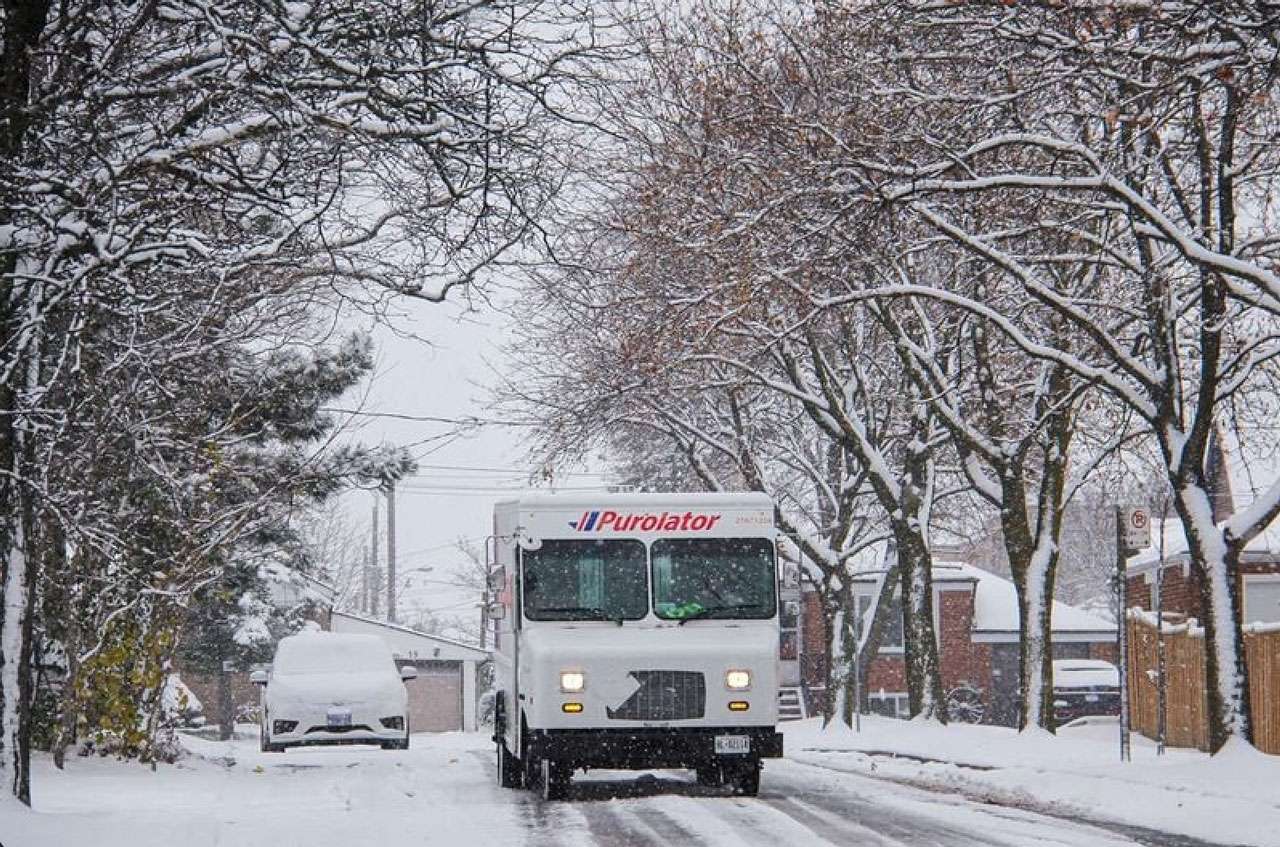
After ordering the shoes, Sinclair said that she received a text message from the delivery company Purolator, which she ignored and deleted.
“I don’t know, I think I thought it looked kind of dodgy,” she explained. Later she said she received a paper notice from Purolator stuck to her car window telling her she had missed a delivery. Sinclair took the paper notice to the collection point and picked up the first pair of shoes.
Not long after, Sinclair said she again received a text message from Purolator telling her that she’d missed another delivery. Believing this was related to the second pair of shoes, this time she clicked on the link and was taken to a page that she said looked convincingly like a Purolator webpage – but that was not the case.
“I almost fell for it. But luckily I didn’t input any of my credentials [like a bank card number],” she said. To double check that the link and site were legitimate, Sinclair said she went directly to the Purolator website and typed in the order number on her receipt. That’s when she saw that her second pair of shoes hadn’t even been shipped and she knew the text message was fraudulent. She also found a notice on Purolator’s website warning customers of potential frauds.
The notice cautions customers: “If you are expecting a delivery, please only use purolator.com to track shipments and update your address,” and advises that, “Purolator will never request banking information, account changes or money transfers.”
“Somehow, whoever sent me the text message, knew about my recent activity and reached out when I was already expecting a package. They even knew what courier service was being used,” Sinclair said.
“It’s a bit worrying because you think you’re savvy – I took some cyber security training at work, for example – but if I was almost convinced….” she said, pausing, before continuing, “It’s just a good reminder to trust your spidey senses and always double check before clicking.”
Fire wood
Angelique Gargantiel had only lived in the Hills for a month before she became the victim of a scammer who said he would sell her two cords of fire wood for $550.
Gargantiel and her husband moved to Alcove from Gatineau at the beginning of the year and wanted to make use of their new country home’s wood stove.
“I was on [Facebook] Marketplace and saw that this guy was selling wood. When I asked him where he was, he said Rupert, and I thought, ‘Oh, that’s great. That’s basically just next door,’” Gargantiel explained.
The person that she communicated with called himself Tyler Fiorontino and appeared to work for a company called David’s Firewood and Delivery.
“I asked if we could come and pick up the wood and he said, ‘No, there’s too much back and forth. We prefer to just deliver it.’ So I said, ‘Okay,’” Gargantiel explained.
She said that the contact told her the business required her to pay upfront.
“I just went along with it,” she said.
Gargantiel added that she and her husband were “feeling a bit desperate” after dealing with the stress of moving to a new place, and although she thought $550 was steep for two cords of wood, she sent the money anyway via e-transfer.
When the delivery of wood didn’t arrive as expected, Gargantiel said she reached out to her contact. After several messages went unanswered, she said she finally realized she had been scammed.
Like Sinclair, Gargantiel felt that the scam was targeted in an oddly specific way.
“How did he know that I was near Rupert? There was nothing on my profile that said I [had] just moved to the area or anything like that,” she wondered.
Gargantiel reported the scam and called her bank to ask them to flag the email address she had sent the money to. She said her bank informed her that scammers rarely use the same email address twice.
She also took to a popular local social media page to share her experience.
“It’s too bad this happened to us, but I really hope it doesn’t happen to anyone else,” Gargantiel said.
iPhone
Like Gargantiel, Wakefielder Pauline Charbonneau recently took to social media to share a warning to locals after she said her mother was targeted by what’s known as a “return-to-sender” scam.
Charbonneau told the Low Down that her mother, who is elderly and declined to speak with the paper, was sent an iPhone that she did not order. After spending several hours on the phone with the telecom provider Bell, she was assured that she would not be charged for the phone. But others have not been as fortunate.
Charbonneau explained how the scam works in her social media post: “It is a sophisticated form of identity theft and delivery fraud,” she wrote. “Scammers use stolen personal information … to open a new account or upgrade an existing one with a telecom provider like Bell, Rogers or Telus. They order a high-end device (like an iPhone 16 or 17) to be shipped to your home address to avoid triggering fraud alerts by the [phone] carrier.”
A legitimate courier service like Purolator, UPS or FedEx usually delivers the package. Sometime later, someone will reach out in person or over the phone claiming to be from a telecom provider’s fraud department. They will explain that the phone was sent by mistake and that it must be handed over to them.
At the time that Charbonneau spoke with the Low Down, her mother had not received any contact from an individual claiming to be part of a fraud department. She said her mom arranged to return the phone to Bell directly.
Charbonneau urged anyone who thinks they may be the victim of this kind of scam to report it to local police or the CAFC.
To report fraud, call the CAFC toll-free at 1-888-495-8501 or go online to reportcyberandfraud.canada.ca. The CAFC recommends reporting suspected fraud even if no money has been lost.