




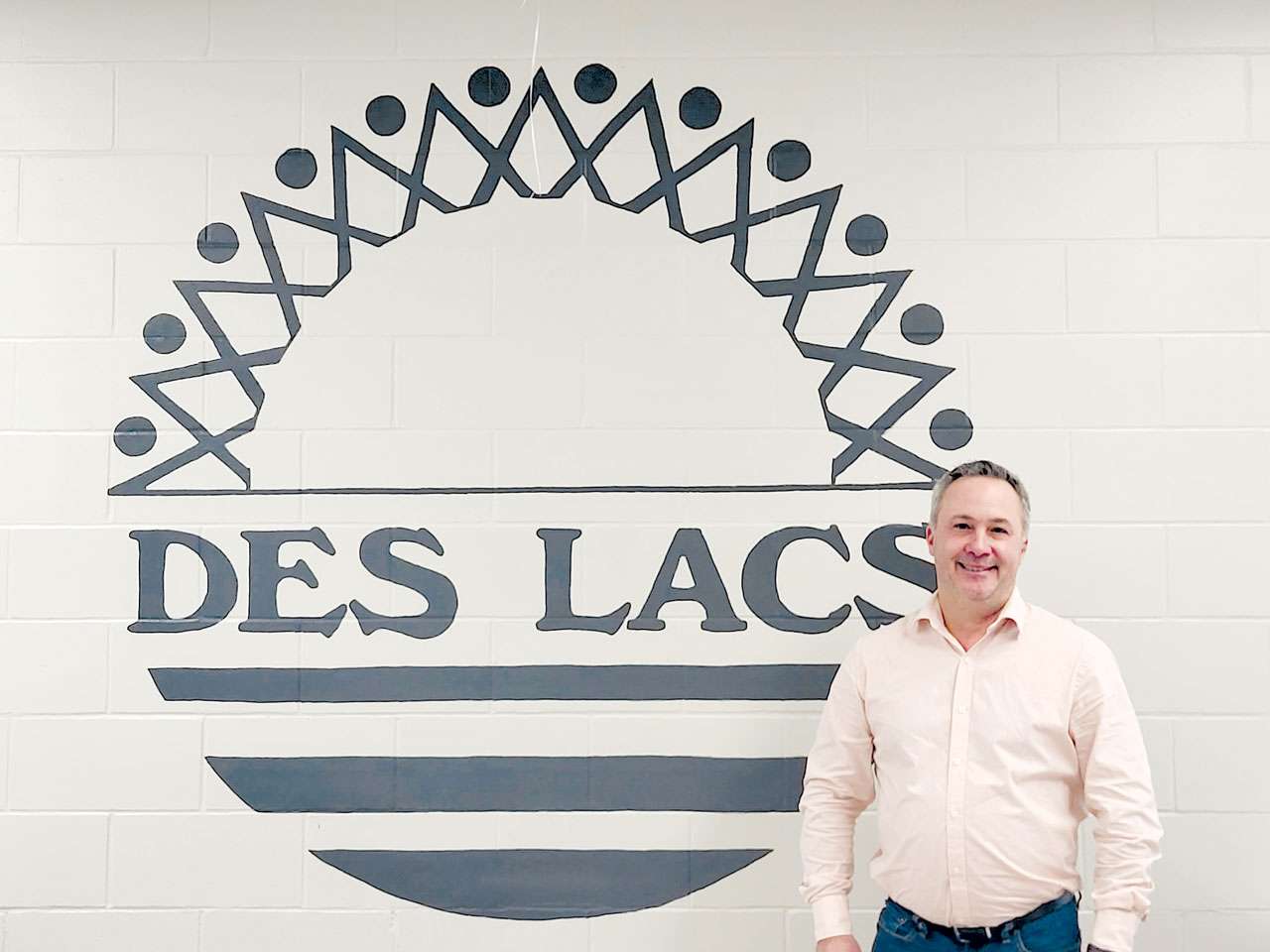

Don’t let its size fool you: Des Lacs in Masham may be one of the region’s smallest schools, but that doesn’t mean it can’t pack a serious academic punch.
This year the 225-student French-language high school earned itself the distinction of being the top-ranked public secondary school in the region, according to the Fraser Institute’s annual report on schools across the country. It’s also among the most-improved: in 2018 Des Lacs was given a score of 3.7 out of 10 (the average for all schools is 6). It now boasts a score of 7.7 based on student achievement in 2024, ranking 86th out of 470 schools in Quebec.
The Fraser Institute is a conservative Canadian public policy think tank headquartered in Vancouver. It has been publishing school rankings since 1998. Each school is scored based on standardized test scores in a range of subjects, graduation rates and other academic indicators.
Des Lacs’ principal, Stéphane Desjardins, has been at the head of the school since the beginning of last year. He told the Low Down that he credits “the quality of the team” at Des Lacs.
“Is there a magic formula? No. I would say it’s more about being available, having good connections and building good relationships,” Desjardins explained.
“If you walk around the school here during break you will see all the teachers in their classrooms with the doors open. The students know they can come and see them…. They build those strong connections. And when students feel that they’re appreciated, that they’re important to the adults, that fosters more commitment, more investment.”
He said that being a small school makes it easier for teachers and staff to build strong relationships. But he admits it also comes with limitations, including a lack of access to some resources like specific learning specialists that are available to bigger, urban schools.
Another challenge the school faces is that an astonishing 59 per cent of its students have special educational needs (for comparison, 40 per cent of students at D’Arcy McGee in Aylmer and 37.6 per cent of students at Philemon Wright in Hull are considered to have special needs.) Desjardins explained that many students have an Individualized Education Plan (IEP) as a formal way to ensure their needs are accommodated, such as taking extra time on a test or using a computer in class.
Again, the school’s smaller size works to its advantage, allowing teachers to follow up on all students’ individual needs, according to Desjardins.
As a result, more kids are succeeding: the failure rate at Des Lacs last year was 10 per cent, down from almost 29 per cent six years earlier.
He said that he takes the Fraser Institute results with a grain of salt: “If I can be honest, I take what I like [from the results] and leave the rest because I know that cohorts change, things can change.”
But he added, “I’m really proud that the school can be in the spotlight…. And if it means that we can recognize what’s working and what’s going on at our school, all the better.”
Local schools hold steady
While Des Lacs came out on top among regional public schools, it was outranked by some local private schools, including Nouvelles Frontières in Gatineau, with a score of 8.3, and Saint-Alexandre, also in Gatineau, which ranked first overall in the province with a perfect score of 10.
Other local public schools held steady with results hovering just above average: Philemon Wright in Hull and D’Arcy McGee in Aylmer both scored 6.3; Mont Bleu in Gatineau achieved 6.2 and Le Carrefour, also in Gatineau, scored 6.9.
Saint Michael’s in Low took a dip from its highest score of 6.5 in 2022 down to 5.6 this year.
éphane Desjardins, didn’t hesitate when asked about her recent achievement, telling the Low Down: “That girl – she is truly special. She is a one-of-a-kind.”