





Something’s cooking over at Hadley Junior and Philemon Wright High School in Hull and Ottawa is taking notice.
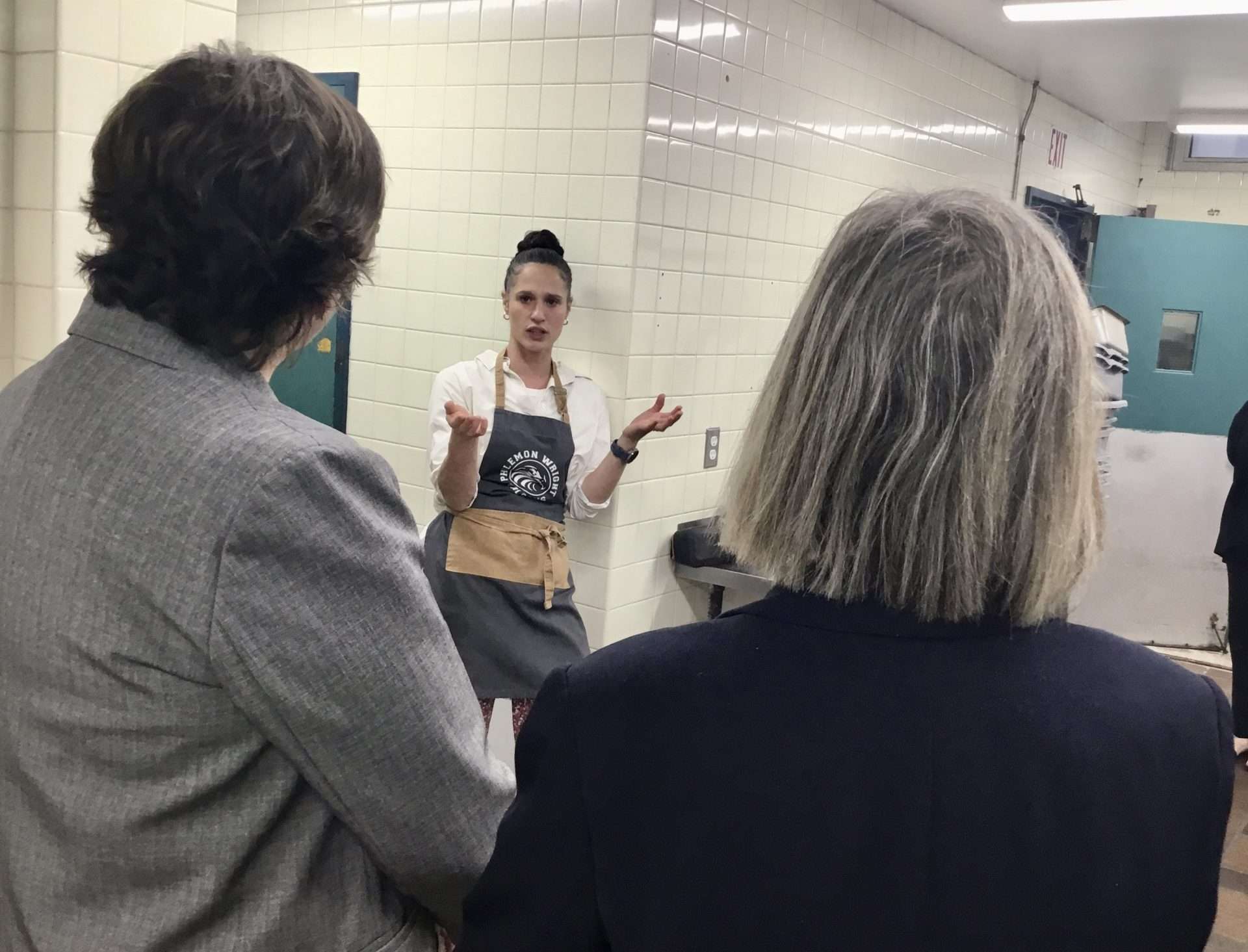
On Nov. 5, two Canadian senators – Marty Deacon from Waterloo, Ont., and Karen Sorensen from Banff, Alta., both of whom have a background in education – visited the school to learn more about the No Student Hungry program, better known as NoSH.
NoSH was started three years ago by teacher and Chelsea resident Susie Leamen, who continues to spearhead the program, along with her colleagues Matt McKechnie (also of Chelsea) and Dermott Guinnane.
NoSH is aimed at doing what its name implies: making sure that no student at the school goes hungry. Students taking Home Economics or enrolled in Semi Skilled Trades and the Work Oriented Training Pathway program prepare nutritious, low-cost meals that are sold to the rest of the school during lunch. Every student at Hadley/Philemon has a NoSH card that their parents can add money to and which can be used to pay for a healthy, homemade meal at school. Unlike meals served by contracted companies in other school cafeterias, which often cost around $10 or more, Leamen said that NoSH meals usually go for around $4, and up to $6 at most.
And the program works on a pay-what-you-can basis to ensure that every student can eat, regardless of means. Leamen explained that around 40 students are not required to pay anything for their NoSH lunches. The fact that all students use an identical card means that no one is singled out or needs to disclose if they receive free meals.
This year Hadley/Philemon – which has a student body of close to 1,400 students – has not hired the services of an external company to provide cafeteria food as it has in years past. The NoSH program now feeds anyone who wants to eat a school lunch, serving around 300 meals a day.
It’s the only program of its kind in Quebec, according to Leamen. But the NoSH team wants to bring the program to other schools – first regionally and later across the country – and are seeking federal collaboration to help scale NoSH’s model nationally.
Senators Deacon and Sorensen happened to visit the school the day after the Liberals federal budget was announced. The budget, if legislated, would make funding for the National School Food Program permanent, with $216.6 million pledged annually starting in 2029.
The NoSH program, which is a registered non-profit and includes a board of directors, has received federal funding but is also trying to diversify its revenue streams and aims to develop a reserve fund, according to Hadley/Philemon principal Dodie Payne. A memo prepared for the senators’ visit lists some of the program’s estimated costs to sustain and grow production, including $50,000 for food supplies, $40,000 for kitchen equipment and $15,000 for coordination support.
Students not only prepare food in the school’s industrial kitchen, some are also involved in growing the food in gardens on the school property. McKechnie has spearheaded this initiative, and this year he developed an elective class for Grade 10 students called Fit to Grow, where students can learn skills to become a market gardener, from seed to the farmer’s market stall. McKechnie estimates that around 800 pounds of garden produce have been used in meals this year.
Senators Deacon and Sorensen toured the school’s kitchen and chatted with Grade 10 students in the midst of preparing massive bowls of chickpea and quinoa salad, piles of cheese tea biscuits, pumpkin and apple turnovers and a hearty beef chili.
Leamen told the senators she believes the program is turning some students into more adventurous eaters, quoting a student who recently told her, “Miss, some of the food you serve is so weird but it’s also so good.” (Leamen curates the menu for meals and snacks each day).
Moreover, the NoSH program is helping students stay in school. According to the teachers, many students working in the program have gone from negligible attendance to almost never being absent.
Principal Payne expressed tremendous gratitude to the teachers running the NoSH program, telling Deacon and Sorensen, “It’s a labour of love and it couldn’t be done without them going above and beyond. They put their whole hearts into it.”
McKechnie added, “Yes, but we are also working hard to make sure this is replicable. If Susie or I get hit by a bus tomorrow, we want to make sure someone else could easily step in and do what we do.”
They also want to give other schools the resources to replicate their model, launching scalable, student-led food programs in other schools across the Outaouais and eventually the country. This is the mission the NoSH team said it hopes the federal government can help them achieve.
At least two Canadian senators seem thoroughly impressed.
“Students are learning life skills, they’re learning the importance of giving back to their community,” Sorensen observed.
“What’s happening in this community is just amazing,” Deacon pronounced.
NoSH will be hosting a fundraising dinner, featuring “elevated cafeteria fare” on Dec. 6. To find out more and purchase tickets, visit the school’s website: hadleyphilemon.westernquebec.ca/events/nosh-fundraiser/