




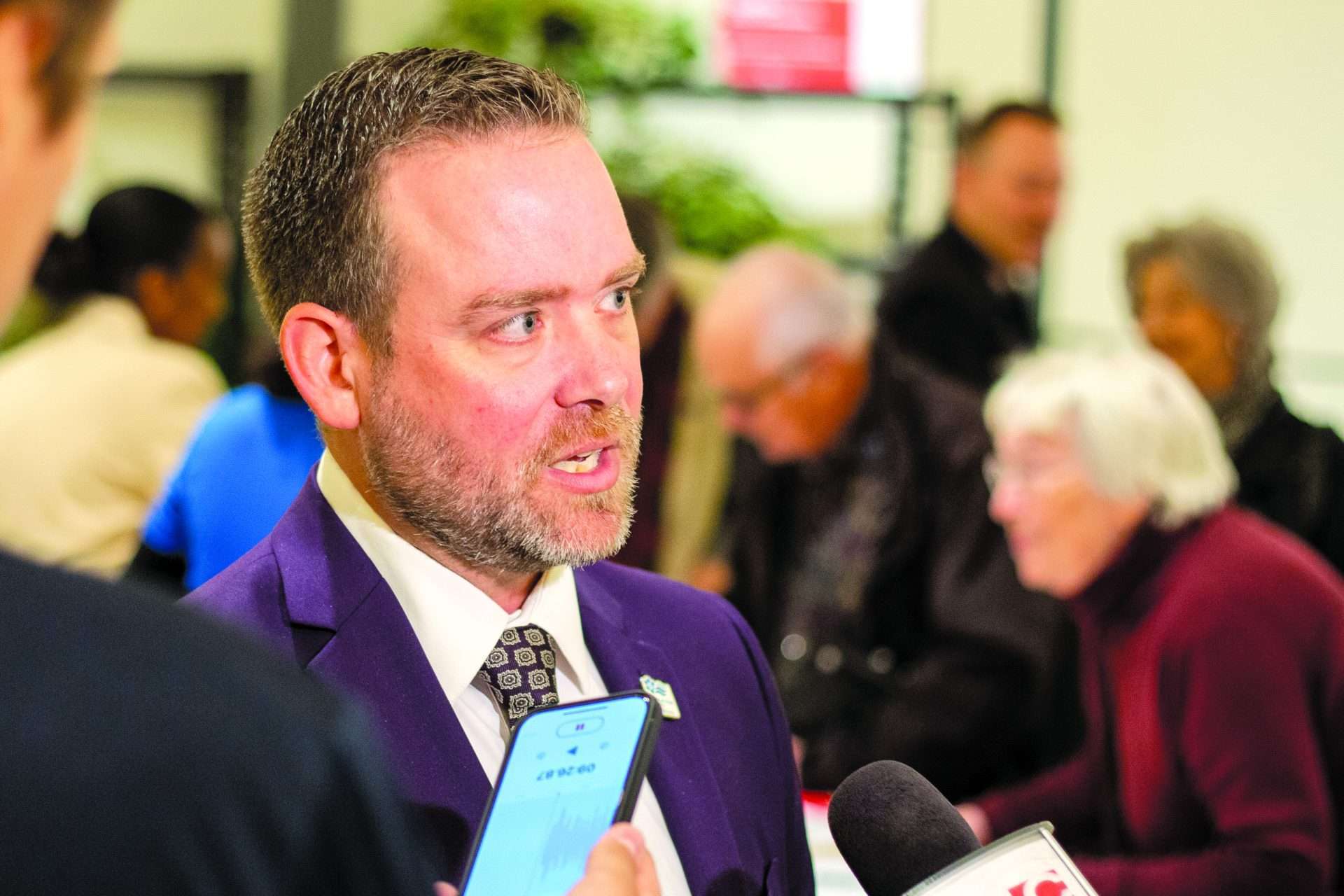

The head of a local health advocacy group says Quebec’s “austerity” budget does nothing to address the region’s health crisis, which inequitably impacts the Outaouais.
Jean Pigeon, the president of the Fondation Santé Outaouais, called it an austerity budget and said it doesn’t address healthcare needs. “It’s a bit disappointing,” he told the Low Down March 28. He said the budget does nothing to address the budgetary shortfalls healthcare in the Outaouais faces and ignores the issue of doctors leaving Quebec hospitals in the Outaouais for Ontario hospitals in Ottawa with better pay.
“The government of Quebec is banking on mainly efficiency gains from Saté Quebec to generate savings,” Pigeon said. “Can we really do more with less? It’s a dangerous message.”
The provincial government put forward its budget for 2025 on March 25, which includes $165.8 billion in planned spending for the year. According to the CAQ and Finance Minister Eric Girard, the plan prepares Quebec to face the economic turbulence of American tariffs. The budget allocates $5 billion over five years to “improving the delivery of health care and social services,” according to provincial documents.
Pigeon said the increase in health spending won’t cover the rising cost of the existing system. “What is worrying is that health care spending growth is capped at three per cent this year, it should drop to two per cent next year, yet even the Health Minister Christian Dubé has acknowledged that these rates are not sufficient to cover the system cost,” he said.
Pigeon said the disproportionate financial challenges in Outaouais healthcare violate the new laws passed last year, which created Santé Quebec.
“Bill 15 actually has an article that states that [Santé Quebec] has the responsibility to distribute all the funds and all the resources throughout the province in an equitable manner. So they’re not even respecting the law right now,” he said.
Pigeon said the solution is spending $200 million to bring healthcare spending in line with the rest of the province and financial incentives to keep healthcare workers in Quebec and not Ontario, like the bonuses healthcare providers can receive in remote parts of the province. “These types of incentives do exist, and they are a tool that we can use,” he said.
Other advocacy groups shared similar messages of discontent toward the amount of funding allocated for services. The province announced nearly $40 million to train more teachers but schools across the province still face budget constraints after the announcement in December that cut $200 million from the operations of school boards and service centres.
The president of the Indipendent Teaching Federation (FAE), Mélanie Hubert, said the cuts will have an impact on students in a statement following the budget announcement. “The budget presented to us today jeopardizes the maintenance of current services; CSSs will have to cut back in several areas to comply with government restrictions,” she said. “It is appalling to see that the Legault government is not taking the urgent needs of Quebec schools more seriously.”
Food Banks of Quebec Director Martin Munger said that funding for food assistance is appreciated, given that he expects food bank usage will increase this year. “In addition to the $10 million already allocated, $24 million in assistance for food purchases will be added, thus providing greater predictability,” Munger wrote in a press release.
According to Food Banks of Quebec, the number of food bank visits in the province is expected to rise from 2.9 million requests per month in 2024 to 3.2 million per month in 2027.