





The widespread introduction of the digital camera in the early 1990s was a seismic event in the profession of the photographer. Then again, in the summer of 2007 there was the ensuing tsunami of the iPhone with its two-pixel camera. This has given “artistic photographers,” as they are referred to, a whole new toolbox in creating their art.
“The computer has become the digital dark room,” Paul Gilbert says. He’s a curator at La Fab in Chelsea, and he is explaining the rationale behind the series of three photography exhibitions of works by local photographers, which he has put together. “I’ve called [the exhibition], ‘What the Lens Remembers’,” he says, “and it’s exploring photography’s role in social memory. Such an exhibition has been long overdue.”
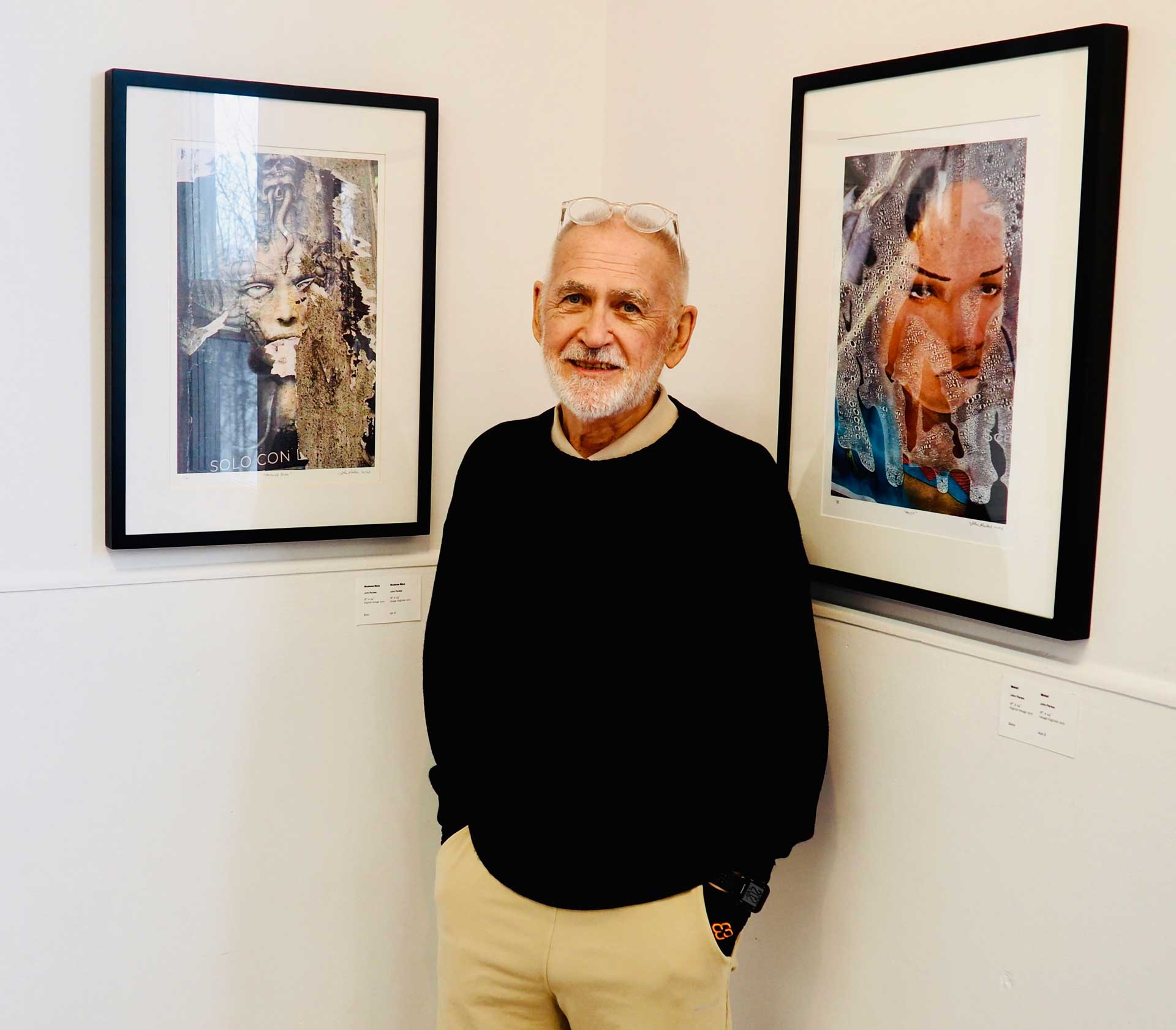
Upstairs in the bright gallery, I chat with the first photographer in the series, Chelseaite John Parkes. Parkes, one could say, photographs what the poles are saying. He takes photos of posters and notices that have built up in layers on hydro poles and walls. The layers have been “atmospherically developed.” This is “found art,” in that Parkes, his artist’s antennae up, walks the streets and comes across suitable examples for his camera. He takes one shot, and there is no image manipulation. His photographs are memoirs of the flux of social culture and politics, which in turn are viewed through the lens of the beholder’s memory.
An English teacher for 30 years, Parkes says that his first work was a construction wall in Toronto that caught his eye. Later, during the six years he spent in Mexico City, he says he lived opposite a very long wall and took pictures of its ever-evolving topography. He recounts a story when a young man with an ice cream cart asked him what he was doing. He explained, and the young man said, “You are making form from visual chaos.”
Parkes smiles and says, “He was absolutely right. That is my creed.”
The series continues with Ottawa’s Sylvain Després.
“He has developed over 300 digital algorithms,” Gilbert says, “and he uses them to reconfigure his subject matter, mostly nature.” The results are beautiful semi-abstracts that prompt the viewer to overlay their own memories on them.
The third photographer in the series is Gatineau’s Marc André Laurin, a more classic photographer, who joined his high school’s photography club and has travelled home and away ever since, camera at hand.
“I search for beauty in details, grandiose landscapes, human expressions and fleeting moments,” he says on his website. His exhibit at La Fab focuses on Mongolia and the landscape and people there including the Uyghurs, who have long suffered human rights abuses.
The What the Lens Remembers series at La Fab commenced on Feb. 21 with the Parkes exhibition, which continues until March 23. The Sylvain Després exhibit will run from March 28 to April 27, and Marc André Laurin’s Mongolian saga will run from May 2 to June 1. Access to the gallery is gained through the side door of La Fab at 8 Ch. Mill, Chelsea, and the gallery’s hours are Friday until Sunday, 1 p.m. until 4 p.m.