





By Hannah Scott-Talib
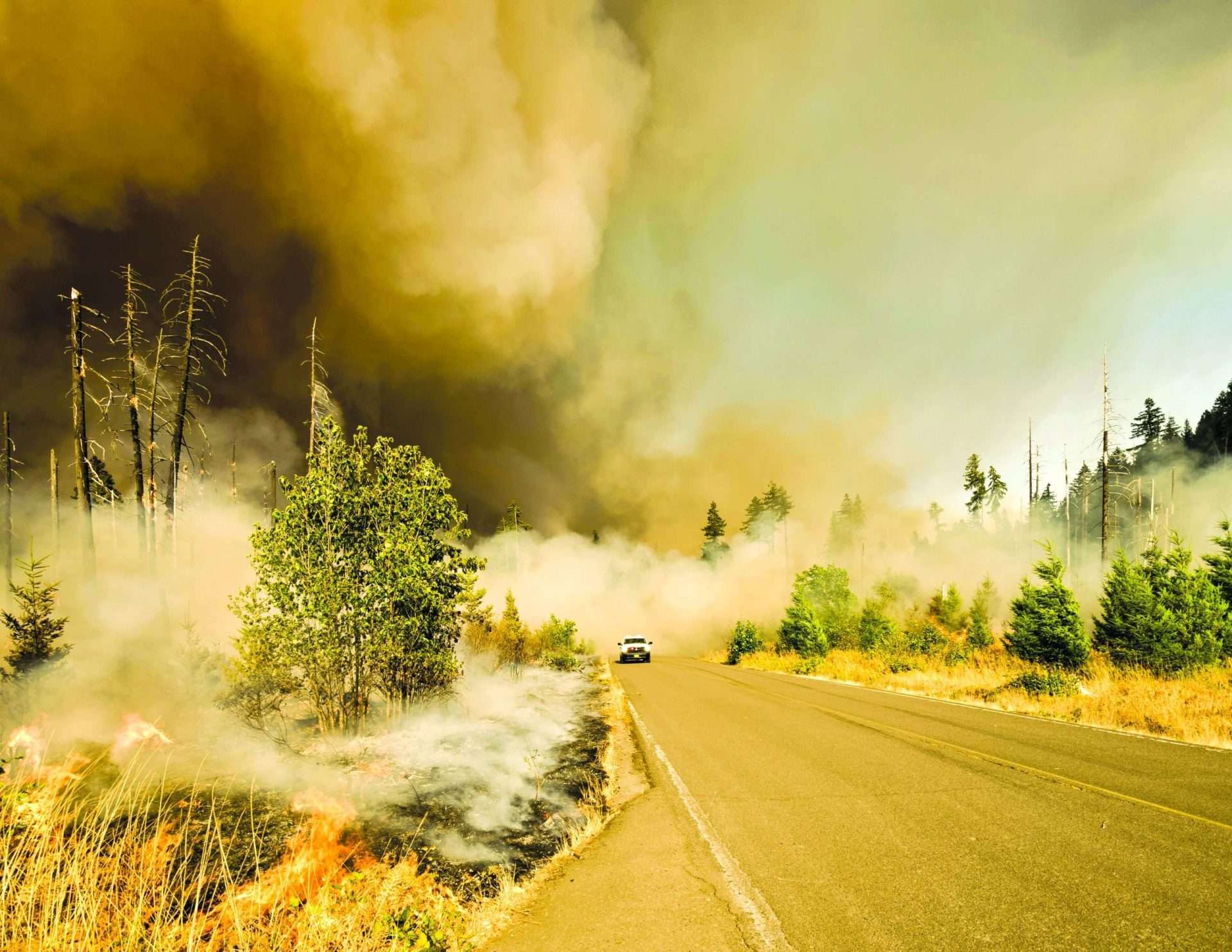
When it comes to a wildfire emergency, some Cantley residents are wondering where they’d go and what they’d do to reach safety. A number of residents expressed their concern over the lack of resources on how to safely proceed in the wake of such an emergency, particularly with regard to climate change.
“If [a] fire were to approach from the north, where would we go, if we have to evacuate?” said Civil Protection Youth Canada (CPYC) founder and Cantley resident Eva Cohen. The CPYC is a non-profit organization focused on “building community resilience and disaster readiness through youth engagement,” as stated on their website.
“We have a traffic jam going south [on Highway 307] every day without [even] having an emergency,” she added.
Her concerns were vocalized at the CYPC’s “Fireside Chat” to discuss wildfire safety, held at the organization’s Cantley headquarters on June 5.
Cohen also stated that she felt alarmed that Cantley council has announced plans to triple housing in the region, yet she pointed out that the municipality’s infrastructure is “not up to date to handle these things on a normal day.”
Another Cantley resident brought up the fact that emergency plans for disaster situations are hard to access. They said that either they are difficult to find by navigating municipal websites, or they simply do not exist at all. The plans that do exist, they added, are often targeted towards the municipal council’s duties in such situations, rather than the residents’ duties.
Aside from an open discussion on the topic, the Fireside Chat hosted guest speaker Bob Wilkinson of the Aviation, Forest Fire and Emergency Services (AFFES) organization in Ontario. Wilkinson presented several strategies for residents to reduce the risk of losing their homes to a wildfire.
Most of the strategies revolved around vegetation management – a wildfire mitigation approach that he said is one of the most important and simultaneously manageable ones for most residents. It involves pruning and thinning down trees that are within 10 metres of a house, and entirely removing trees that are within two metres of a house. Certain plants and trees are more fire-prone than others and should not be kept too near a residence, such as: cedar, pine, spruce and fir trees, and juniper bushes.
Wildfires are most commonly started through the spreading of pre-existing embers and sparks, which Wilkinson stated can blow up to two kilometres ahead of an ongoing fire. He says thinning out shrubbery in the vicinity of a house reduces available fuel for a wildfire to spread.
Additionally, for anyone in the process of building or looking for a house, Wilkinson noted that certain construction materials are better than others when it comes to fire resistance. For instance, tin roofs are a safer alternative to asphalt shingles and composite sidings are safer than vinyl.
Since many rural residents have wood stoves, and many store firewood in dry spaces such as under decks or alongside houses, Wilkinson said this was risky and suggested keeping wood piles isolated and away from homes.
In the event that a wildfire does reach the area, Wilkinson mentioned that one lesser-known tip when it comes to firefighter search and rescue is that residents should leave on as many lights as possible within their houses to facilitate the process of being found.
Roughly 15 people attended the Fireside Chat. Cohen stated that CPYC hopes to hold another natural disaster safety talk for the community soon, potentially on what to do in drought conditions.